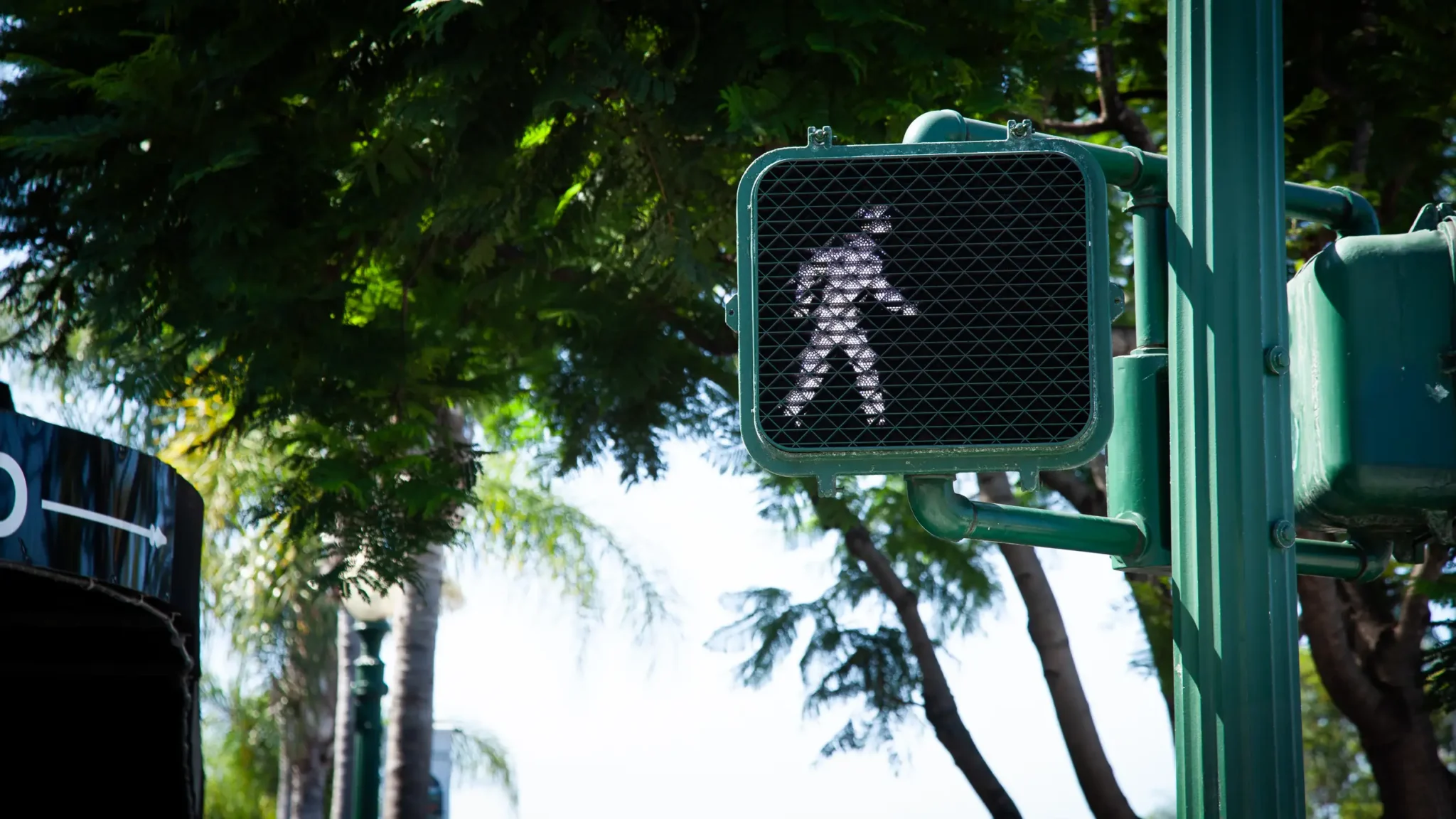
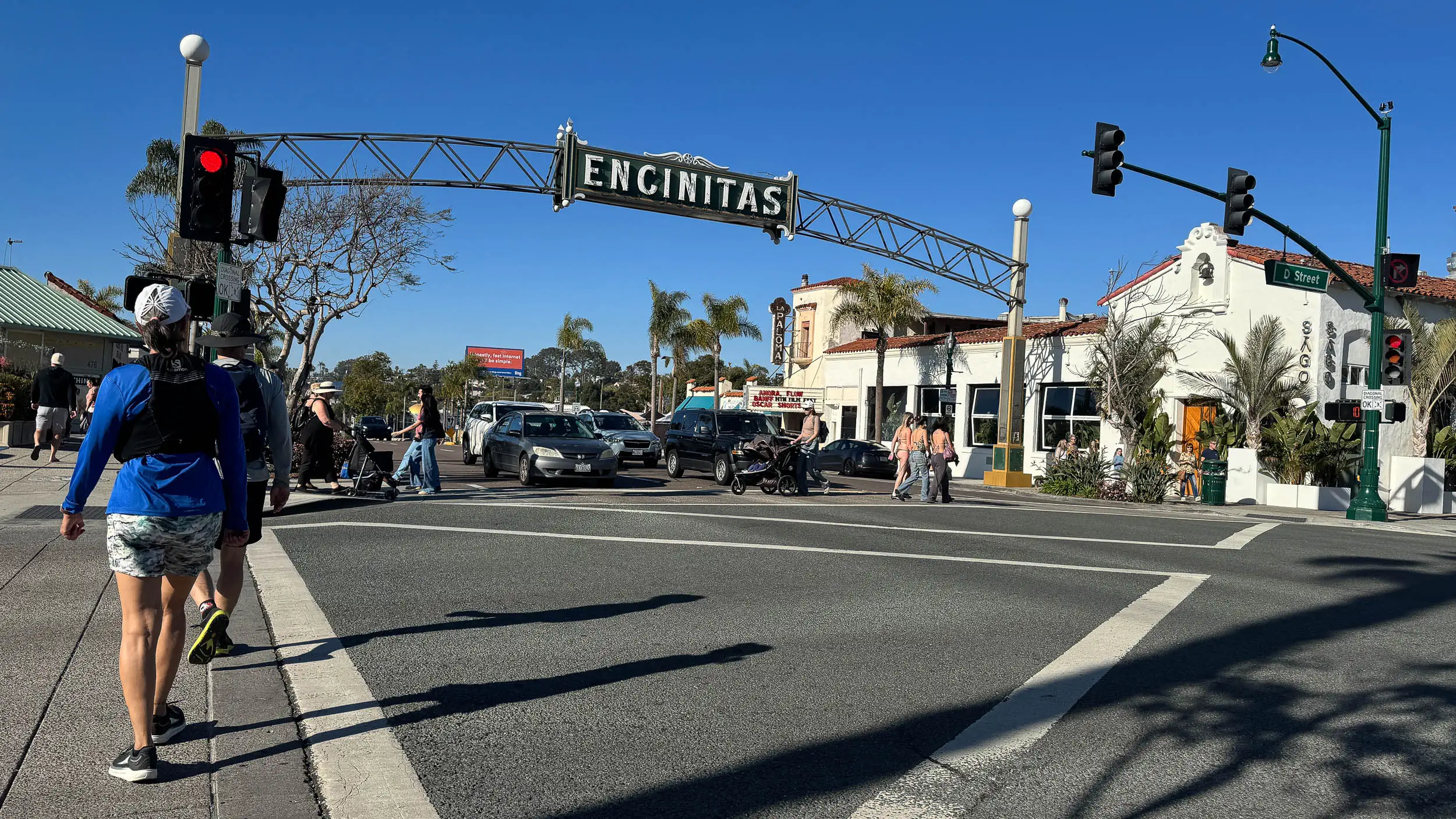
If you’ve been walking around Encinitas lately, you may have noticed that walk signals change before the traffic signal changes to green, giving you a head start. This subtle yet significant safety improvement is called a Leading Pedestrian Interval or LPI.
A Leading Pedestrian Interval initiates the pedestrian or walk signal approximately 3-7 seconds before the traffic signal, allowing pedestrians to enter the crosswalk before motorists are given a green light to proceed into the intersection.
Pedestrian safety benefits of Leading Pedestrian Intervals
Improves Pedestrian Visibility – Allowing pedestrians to enter the crosswalk first gives them more presence and visibility in the intersection before vehicles can turn right or left.
Reduces Conflicts – Separating the pedestrian crossing phase from the vehicle turning phase reduces the risk of collisions. “LPIs reduce conflicts between pedestrians and vehicles.” In New York City, studies show that LPIs reduce pedestrian injuries and fatalities by 56%.
Increases Driver Yielding – When pedestrians are already walking across the intersection, they are more visible, increasing the likelihood that drivers will yield the right of way.
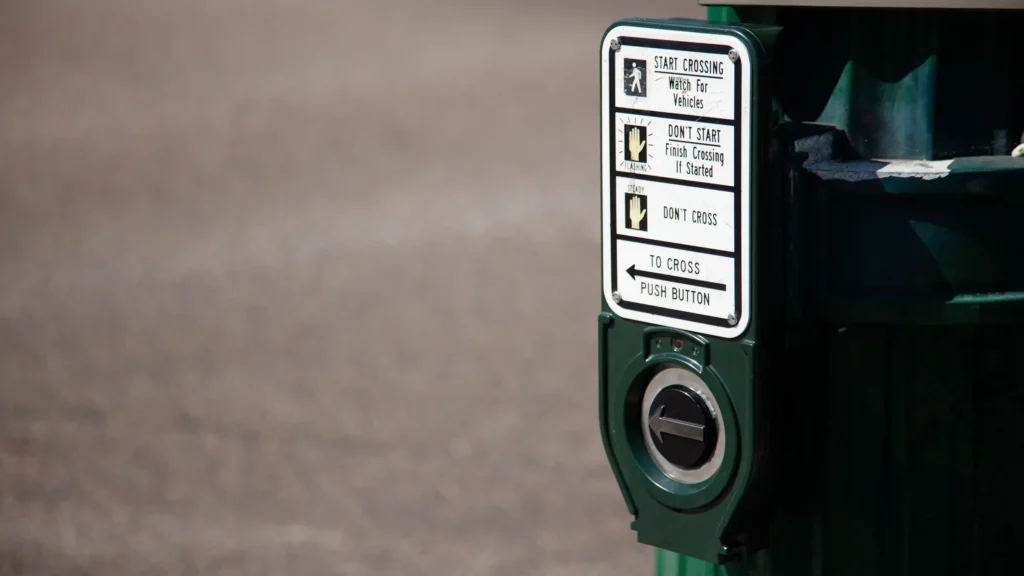
While LPIs have been in practice for quite a while, they were formally recognized by the MUTCD in 2009. Since then, their popularity and usage have increased significantly. Recently, LPIs have been more frequently implemented in cities across the country.
Installing LPIs is relatively inexpensive for municipalities. It doesn’t require new hardware and involves changing signal controller settings. When only controller settings need to be changed, LPI costs can be as low as $200. If a pedestrian/vehicle study and retiming analyses are required, the costs may range from $1,200 to $1,500 per signal. If a city already has modern traffic signal controllers, which is common in Southern California, implementing LPIs requires only a low cost, as previously mentioned.
However, if the city needs to upgrade outdated traffic signal controllers, costs can range from $30,000 to $50,000 per intersection. Fortunately, many cities use state and federal grant funding, such as HSIP grants, to cover these upgrades and improve pedestrian safety at no local cost. In any case, LPIs are a relatively quick and inexpensive way for cities to improve pedestrian safety. It is recommended that LPIs are paired with restrictions on Right-Turn-On-Red (RTOR) to further reduce pedestrian-vehicle conflicts.
AB 2264 for State-Controlled California Streets
In September 2022, Governor Newsom signed AB 2264, which stipulates that Caltrans must include a Leading Pedestrian Interval when adjusting or installing new pedestrian signals on state-controlled streets. AB 2264 will only have a small impact on Encinitas streets since Caltrans only manages I-5 through the area as well as several intersections adjacent to I-5 on-ramps and off-ramps; however, it creates a state-driven precedent and model for more California cities to adopt LPIs within their municipalities.
LPIs for Cyclist Safety
Incidentally, the Omnibike Bill, AB 1909, was signed at the same time as AB 2264. This bill delivered several benefits for cyclists, but most notably, AB 1909 makes it legal for cyclists to cross the intersection with the LPI pedestrian signal before the traffic light turns green. This is important because it allows cyclists to cross into an intersection before motorists can make left or right turns, endangering cyclists’ safety.
Safer Crosswalks in Encinitas
LPIs are currently being installed throughout Encinitas. The city received a Caltrans Cycle 10 HSIP grant to fund the installation of leading pedestrian intervals (LPIs), traffic signal upgrades for LPI operations, and high visibility crosswalk striping at intersections throughout the city. In November 2024, a construction contract was awarded, and LPI implementation will commence in early 2025 and continue through Q1 and Q2 of 2025. LPIs will be installed at 45 intersections across Encinitas.
Cities like San Francisco, Los Angeles, and San Diego have already implemented LPIs with positive results, demonstrating their effectiveness in reducing pedestrian-vehicle conflicts. While LPIs are highly effective, some cities have observed occasional driver confusion at newly implemented intersections. Public education and enforcement can help mitigate these challenges.
These Leading Pedestrian Intervals, along with the new Daylighting law, are easy, low-cost improvements for pedestrian safety in Encinitas. Residents interested in learning more about LPIs or providing feedback on pedestrian safety improvements can visit the City of Encinitas website or attend upcoming public meetings on traffic safety.