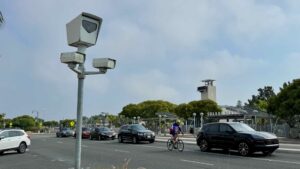
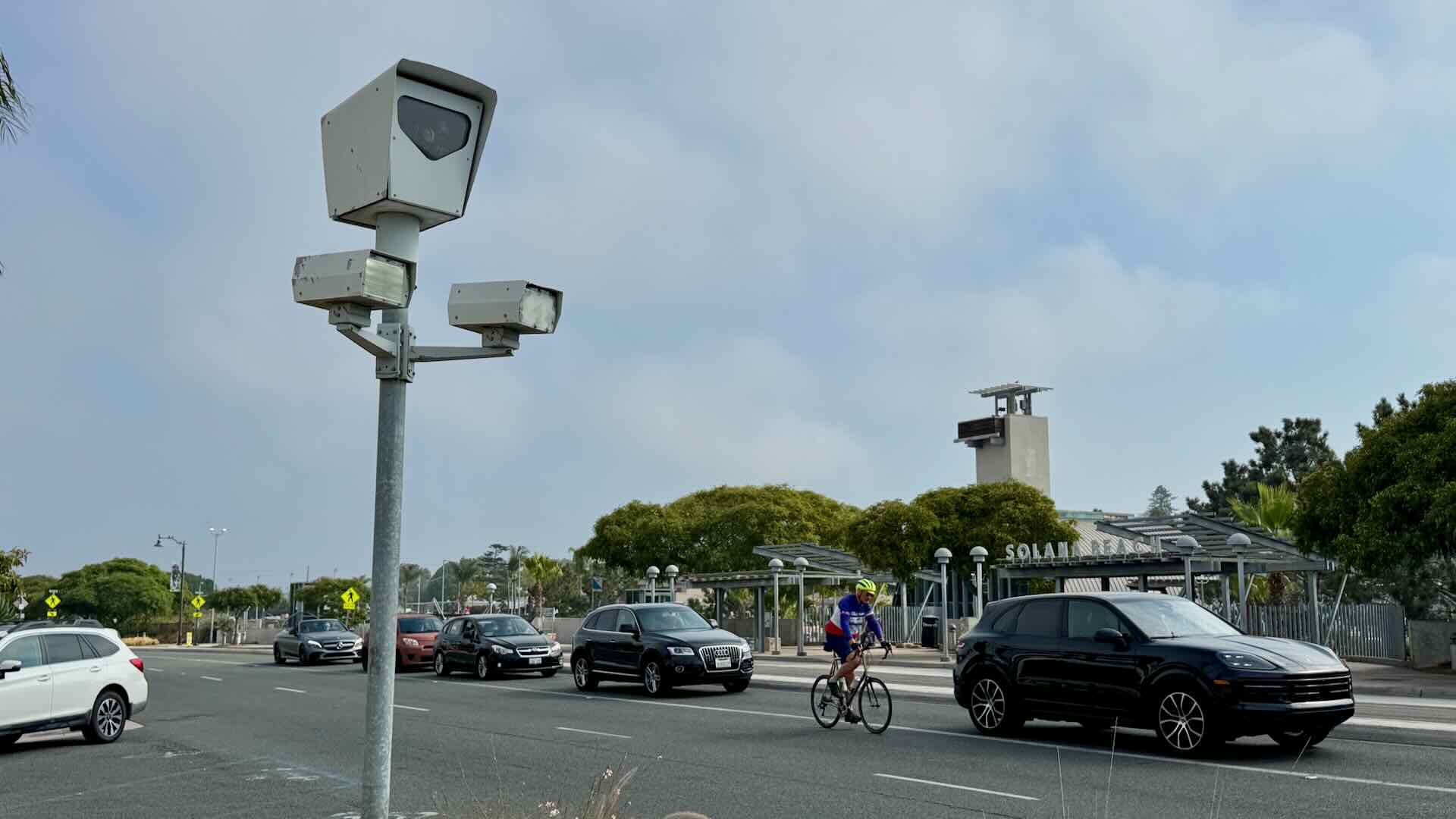
In January 2026, California’s new red-light automated enforcement bill, SB 720, known as the Safer Streets Act of 2025, went into effect. This new law introduces a new civil enforcement framework through the “Safer Streets Program,” shifting red-light camera violations from criminal to civil penalties and emphasizing equity, transparency, and traffic safety.
This new law will differ significantly from the old red-light enforcement system and provide an effective, fair way to deter red-light violations. To help understand those differences, we’ve put together a comparison of old vs. new red-light camera laws.
Legal Framework & Enforcement Approach
Old System
- California’s original red-light camera law dated back decades and required that the driver be identified (via a clear photo) to issue a violation.
- Red-light violations captured by cameras were treated as criminal traffic offenses, resulting in fines, potential points on the driver’s license, and possible insurance rate increases.
SB 720 (New Law - Jan. 2026)
- Shifts enforcement to a civil model, similar to a parking ticket, treating violations as civil penalties rather than criminal offenses.
- Liability is shifted from the driver on the scene to the vehicle’s registered owner. Capturing the license plate is sufficient, with no need to identify the driver’s face.
- Violations do not add points to the driver’s license or necessarily impact insurance because they are civil, not criminal.
Fines & Penalty Structure
Old System
- Fines varied, but camera-issued violations could carry high penalties (e.g., ~$490 or more even on the 1st offense) because they were part of criminal traffic enforcement.
- Penalties might include additional court fees, and because they were criminal, they sometimes affected driving records.
SB 720
- SB 720 establishes a tiered civil fine structure (after any grace/warning period):
• 1st offense: ~$100
• 2nd: ~$200
• 3rd: ~$350
• 4th+ within 3 years: ~$500 - Tickets are mailed to the vehicle owner’s address on registration.
- No driver identification requirement — simplifies enforcement and administration.
Grace Period & Implementation
Old System
- There was no mandated statewide warning period; enforcement and notices were up to each city/county and tied to local contracts.
SB 720
- For newly installed red-light cameras under SB 720, there must be a 60-day warning period during which drivers caught running a red light receive only a warning notice (no fine).
- After warnings, full civil enforcement begins with fines.
Policy Goals & Revenue Allocation
Old System
- Primarily focused on enforcement and deterrence, with less detailed statewide guidance on safety reinvestment.
- The prior model also raised stronger privacy concerns because it required high-quality driver images.
SB 720
- Emphasizes traffic safety, equity, and predictability, aiming to reduce red-light running and serious crashes more effectively.
- Revenue from civil penalties must be reinvested in local traffic safety improvements, such as pedestrian crossings and traffic-calming measures, not general city funds.
- Removes the need for facial recognition and stresses privacy protections in data handling.
What does SB 720 mean for Encinitas?
Old System in Encinitas
- Encinitas had a red-light camera program with cameras at key intersections (e.g., El Camino Real & Encinitas Blvd.) operating from about 2004 through 2020 under the old enforcement model.
- The City Council voted in May 2020 to end the contract with the camera provider due to concerns about high ticket costs and public criticism.
- The old red-light camera system faced significant backlash from Encinitas residents because they felt it was too punitive and potentially focused on revenue rather than safety.
SB 720 Implications for Encinitas (Post-2026)
- SB 720 now gives the Encinitas City Council a clear and consistent legal path to re-adopt automated red-light camera enforcement.
- Because the new system treats violations as civil penalties and doesn’t require driver identification or criminal procedure, it addresses some of the core concerns that led Encinitas to end its previous camera program.